

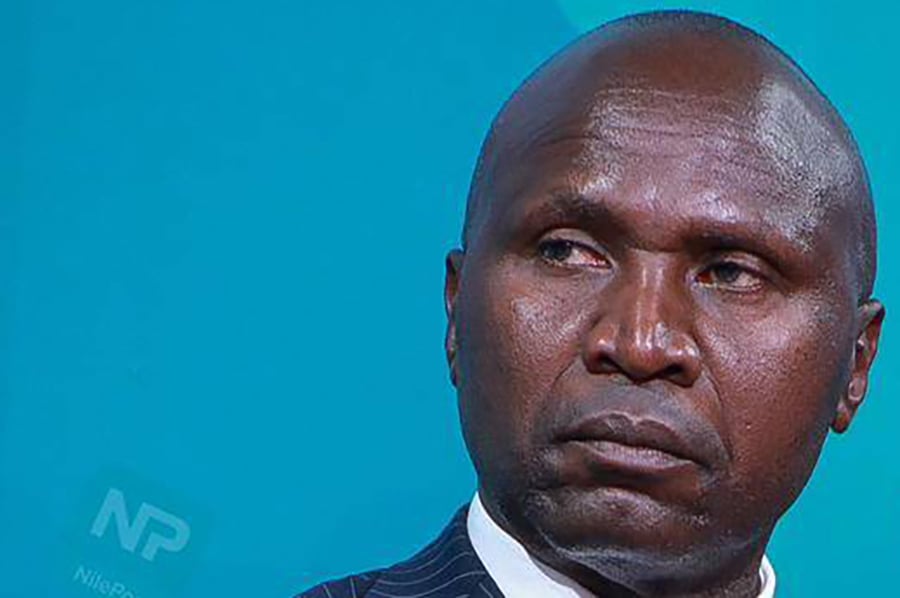
Theodore Ssekikubo was already on the ropes after suffering a knockout in the ruling National Resistance Movement primaries, and the latest ruling from the High Court has landed like a final coup de grâce.
The Lwemiyaga County Member of Parliament has lost an attempt to revive an election appeal after the court ruled it was filed outside the strict timelines set by law.
The High Court in Kampala has dismissed an application by Ssekikubo seeking to validate an election appeal he lodged out of time, holding that the court has no jurisdiction to extend statutory deadlines in election-related matters.
In a ruling delivered on January 6, 2026, Justice Joyce Kavuma struck out Ssekikubo’s appeal against the Electoral Commission’s decision to uphold the nomination of Brig Gen Emmanuel Rwashande as a parliamentary candidate for Lwemiyaga Constituency.
“The petition filed by the applicant is hereby struck out,” Justice Kavuma ruled, describing the application before court as totally without merit.
Ssekikubo had challenged the nomination of Brig. Gen. Rwashande, arguing that it was irregular and did not comply with the Parliamentary Elections Act.
His complaint was dismissed by the Electoral Commission on December 3, 2025, prompting him to seek redress in the High Court.
However, the appeal was filed outside the mandatory five-day deadline provided for under the Parliamentary Elections (Interim Provisions) (Appeals to the High Court from Commission) Rules.
Ssekikubo subsequently applied to have the late appeal validated, blaming delays on the timing of notification of the Electoral Commission’s ruling.
In rejecting the application, Justice Kavuma emphasised that election laws impose strict and mandatory timelines that courts are not permitted to waive.
She noted that the use of the word “shall” in the rules makes compliance obligatory rather than optional, adding that election procedures are not merely directory but must be strictly followed.
Justice Kavuma further observed that election disputes form a unique category of litigation in which time is a critical factor.
“Election matters are by their very nature a unique and special breed of litigation where time is of essence,” she said, adding that an intending appellant bears a heightened duty to pursue every step in the appeal process expeditiously.
The court also dismissed Ssekikubo’s claim that he was not properly informed of the Electoral Commission’s ruling, finding that his lawyers were duly served on December 3, 2025, the same day the decision was delivered.
“Having evaluated the evidence, it is the finding of this Court that the first respondent served the applicant’s lawyers on 03/12/2025 when the ruling was delivered and that service was effective,” Justice Kavuma ruled, noting that time for filing the appeal began to run from that date.
She questioned Ssekikubo’s diligence, observing that he waited nearly two weeks before actively following up on the ruling and failed to present documentary proof showing consistent efforts to obtain it.
“This is not the conduct of a vigilant intending appellant in a pre-election matter,” the judge said.
Justice Kavuma concluded that where limitation periods are imposed by statute, courts have no authority to extend them unless the law expressly provides for such discretion.
“Where limitation time is imposed under a statute, such period cannot be extended by any court unless there is a provision in the statute for such exercise of discretion,” she held.
As a result, Election Appeal No. 0014 of 2025 was struck out together with the accompanying application.
However, the court ordered each party to bear its own costs, citing the public interest nature of electoral disputes.
“Courts have to careully consider the question of awarding costs so as not to unjustifiably deter aggrieved parties from seeking court redress,” Justice Kavuma said.
